

Whether you’re hiking with your cat, taking a road trip, or going to the vet, the right carrier can make the difference between a smooth outing and a stressful struggle.
Luckily, today’s cat carriers offer far more than a simple plastic box with a front door. Cat carriers now come in a wide variety of designs with features that improve safety, convenience, and comfort for both cats and humans.
Which features are must-haves? Which ones should you skip?
As the author and illustrator of the only book on cat carriers, “The Ins and Outs of Cat Carriers: A Veterinarian’s Guide to Cat Carriers,” I break down seven features of the best cat carriers.
Best cat carrier features to look for
These are the characteristics to keep in mind when choosing your next cat carrier.
1. Multiple Doors
Older styles of cat carriers only have one front-facing door. Modern carriers often have a top door, which makes dropping a cat in feet-first easier. There are even backpacks that can be opened from the bottom.
The best cat carriers tend to have more doors or openings, making it easier to get a cat in or out of it.
2. Lockable Zippers
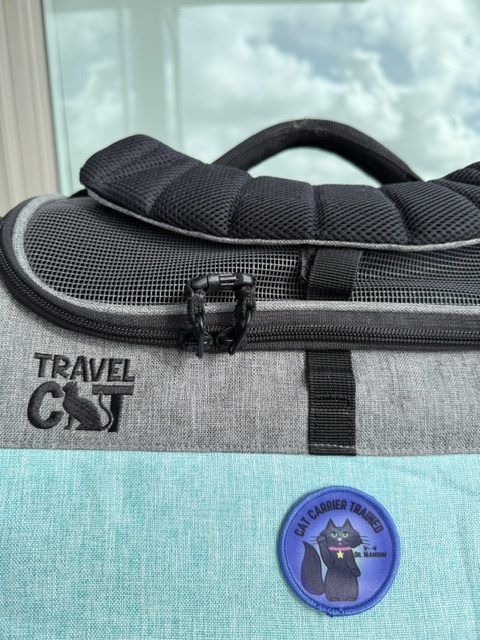
Cats can open zippers with their claws and then escape, getting lost or, worse, badly injured.
The best soft-sided, rolling, and backpack carriers have zippers that clip together or lock in place to keep kitty escape artists safe.
3. Crash Protection
The carrier is like a car seat, seat belt, and helmet for your cat — it’s what protects them if an accident occurs. The best cat carriers are crash-tested, usually through the Center for Pet Safety (CPS), to verify that they maintain their structural integrity during a collision.
Much like human baby and child car seats, crash-tested carriers provide an additional level of protection in an accident.
Keep in mind that just because a cat carrier has seatbelt loops doesn’t mean it’s crash-tested.
4. Secure Storage Pockets
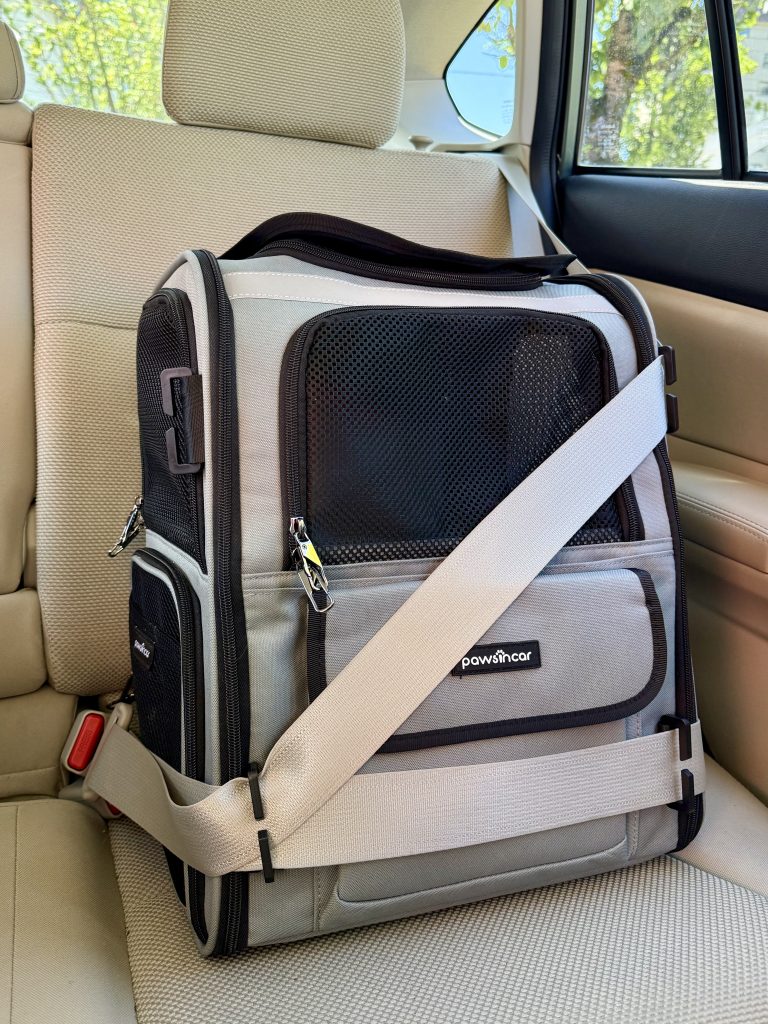
It’s handy to have pockets to store cat treats, cat wipes, and travel documents. When looking for the best cat carriers, look for pockets that zip up or have Velcro closures.
After all, nobody likes things falling out of their pockets and having to retrace their steps to find lost items, especially when they’re on an adventure in the wilderness.
5. Pull-Out Insert
When cats refuse to leave their carriers but need to come out — to use a litter box during travel, for example, or to be examined by a veterinarian — it helps to have a carrier with a drawer-like bottom or pull-out insert.
Never scruff a cat to get them out because scruffing hurts and can make them hand-shy.
6. Padded Straps
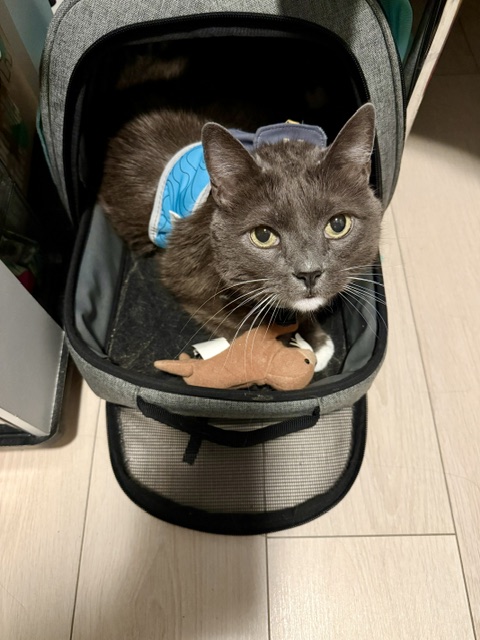
The average cat weighs 8–12 pounds (3.6–5.4 kg), so carrying a cat for an extended period — whether on a hike or traipsing through an airport — can be physically demanding.
Extra padding, whether on backpack straps or shoulder straps, can make a big difference to the human carrying the cat.7. Wheels
One cat carrier feature that many people are unaware of is wheels. Some of the best cat carriers have built-in wheels, while others have detachable wheels, allowing them to be rolled around instead of carried using a shoulder strap or backpack straps.
Rolling carriers are portable like carry-on luggage and are great for larger cats and for people with back or shoulder pain.
A few more tips for selecting the best cat carrier
Keep in mind that few, if any, have all seven of these features, but the best cat carriers have most of them.
Also, even the best cat carriers won’t be useful if a cat is afraid of it, so carrier training and positive reinforcement are important.
Read more: How to teach your cat to ride in a backpack
Bonus features to look for
- Expandable sides: Some soft-sided and backpack carriers can expand like an accordion to give the cat inside more room while traveling or visiting the veterinarian.
- Luggage sleeve pass-through: Some soft-sided and backpack carriers can slide onto a rolling suitcase handle, allowing them to be wheeled around instead of carried.
What to avoid
- Screws: Hard-sided carriers with screws can be difficult to disassemble quickly if a frightened cat refuses to come out. Veterinary staff often need to remove part of the carrier for safe handling, and clips or zippers are generally faster and easier to open. Also, screws can rust and eventually break, compromising the safety of the carrier.
- Heavy Carriers: Whether made of hard plastic or a softer material, carriers that are already heavy to begin with only feel heavier with a cat inside. Heavy carriers increase the risk of injury to the human carrying the cat.
The bottom line for the best cat carriers
The cat carrier is an essential item for the transport and safety of cats, so don’t treat it as an afterthought. Choosing a carrier with great features like the seven listed above can make your adventures, travels, and veterinary visits safer, easier, and more enjoyable for both you and your cat.
For more cat carrier tips, please check out my book, “The Ins and Outs of Cat Carriers: A Veterinarian’s Guide to Cat Carriers,” which is available on Amazon, Kobo, Etsy, Google Play and Apple Books.
Note: This isn’t a sponsored article.

About the Author: Dr. Mansum Yau is a veterinarian, certified canine massage therapist, public speaker, stand-up comedian, and the author and illustrator of “The Ins and Outs of Cat Carriers: A Veterinarian’s Guide to Cat Carriers.” She lives in Vancouver, Canada, with her senior adventure cat, Boo, and one-eyed dog, Penny. For more cat carrier tips, visit my YouTube page.